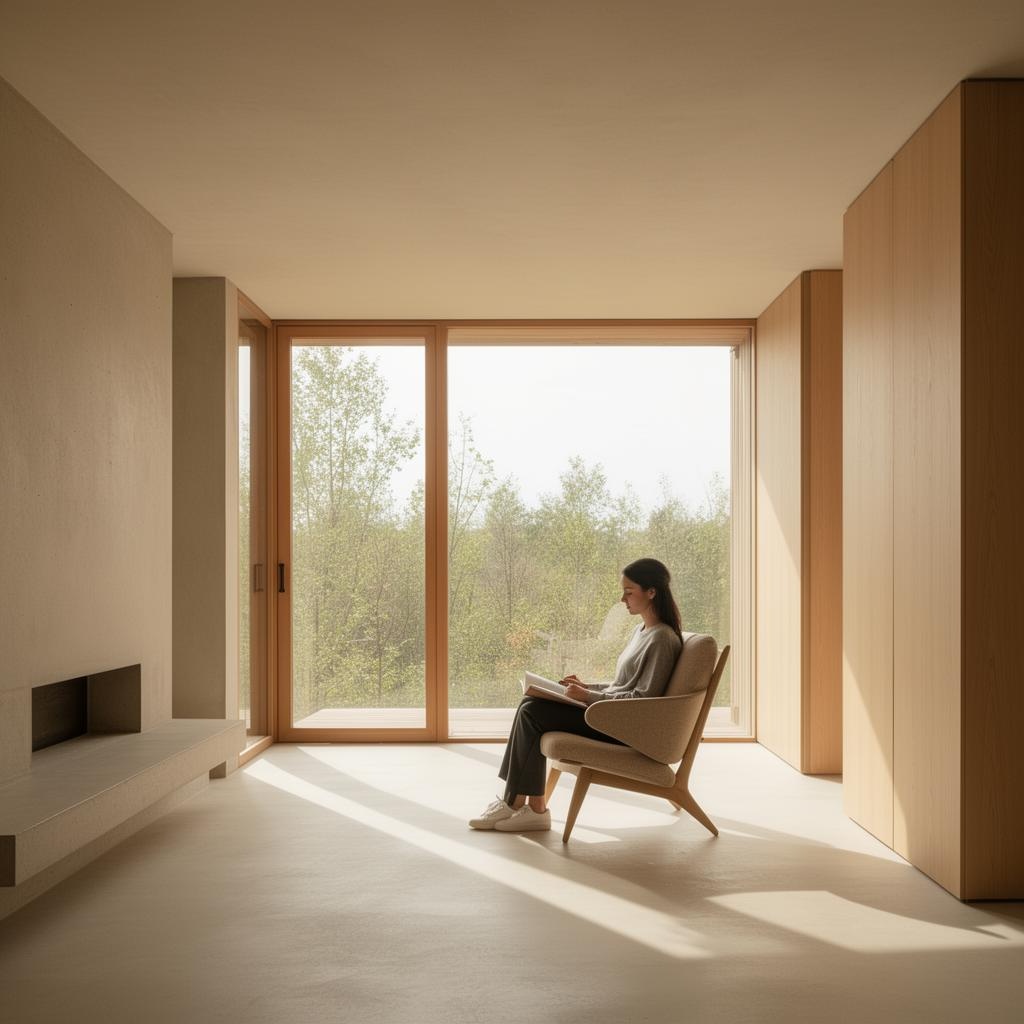
Why Most Retreats Don’t Work for Structured Thinkers
There is nothing inherently wrong with retreats.
But they are not built for everyone.
Many high-functioning adults assume that if they feel depleted, misaligned, or quietly stuck, the solution is to "get away." A retreat seems logical. Change the environment. Step out of routine. Surround yourself with intention.
Yet a surprising number return unchanged.
Not because they weren't committed.
Not because they didn't try.
But because the format itself was misaligned.
Most retreats are designed around emotional intensity.
Group vulnerability.
Facilitated sharing circles.
Breakthrough exercises.
Unstructured afternoons.
Energy spikes followed by exhaustion.
For certain personalities, this works beautifully.
For structured thinkers, it doesn't.
Who Is a Structured Thinker?
A structured thinker is not emotionally unavailable.
They are cognitively disciplined.
They:
Process internally before speaking
Value predictability and logistics
Think in systems rather than abstractions
Integrate insight privately
Prefer clarity before exposure
Make deliberate decisions
These individuals often appear composed. Capable. High-performing. They manage complexity well. They hold responsibility well. They adapt quickly.
But when placed in environments that reward spontaneous vulnerability or public emotional processing, something subtle happens.
Their nervous system doesn't settle. It scans.
What is expected of me?
What happens next?
Is there an outcome?
How long will this go?
Instead of softening, they remain cognitively engaged.
And cognitive engagement is not recalibration.
The Hidden Mismatch
Many retreats assume that emotional intensity creates transformation.
For structured personalities, intensity creates vigilance.
When logistics are unclear, the mind compensates.
When participation feels implied, autonomy contracts.
When schedules are fluid, cognitive load increases.
Even in beautiful locations.
Especially in beautiful locations.
The result?
They attend every session.
They take notes.
They show up fully.
And they return home with insight — but not integration.
They were stimulated. They were not recalibrated.
The Nervous System Factor
This is not about preference.
It's about regulation.
The nervous system does not restore itself through spectacle.
It restores through safety and predictability.
When structure is ambiguous, high-capacity adults do not relax. They organise internally.
When emotional processing is public, they moderate themselves.
When programming is intense, they manage energy rather than metabolise experience.
They are not resisting growth.
They are protecting coherence.
And coherence is often what has kept them successful.
What Actually Works
Structured thinkers recalibrate differently.
They recalibrate when:
Logistics are handled in advance
Expectations are explicit
Participation is optional
There is time to think
Silence is normal
Privacy is respected
The day has rhythm
Transformation for this profile rarely looks dramatic.
It looks like:
A quiet decision to leave a role.
A conversation finally initiated.
A boundary set without apology.
A restructuring of priorities.
A recalibrated ambition.
No one claps.
No one witnesses it.
But it holds.
Why Format Matters
The retreat model assumes that collective intensity accelerates change.
For structured thinkers, collective intensity disperses energy.
Private architecture consolidates it.
Architecture means:
Clear sequence.
Predictable pacing.
Designed friction — not chaos.
Intentional exposure — not emotional flooding.
Integration time built in — not squeezed at the end.
When the outer environment is organised, the inner environment can reorganise. Without pressure. Without spectacle. Without collapse.
The Difference Between Escape and Recalibration
Many high-performing professionals do not need escape.
They need containment.
Containment is not restriction.
It is structured freedom.
It reduces decision fatigue.
It lowers cognitive load.
It creates space for clarity to surface without force.
Paradise without design is beautiful — but static. Structure creates movement.
The Quiet Truth
Most capable adults do not burn out because they lack holidays.
They burn out because their environments never allow recalibration.
They move from responsibility to responsibility. From decision to decision. From output to output.
When they take time away, they often recreate the same pattern:
Over-scheduled itineraries. Prestige locations. Optimised experiences.
Or the opposite: total unstructured drift.
Neither restores agency.
Deliberate structure does.
The Shift
This is not about being anti-retreat.
It is about recognising that format determines outcome.
If you are wired for structure, you do not need to be dismantled.
You need to be reorganised.
Not through intensity.
Through design.
Because clarity does not arrive when you are overwhelmed. It arrives when your system feels safe enough to think.